Aliko Dangote Biography
Aliko Dangote is a Nigerian billionaire businessman, industrialist and philanthropist. He is the founder, president and chief executive of Dangote Group.
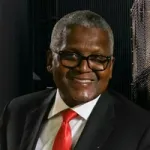
| Legal Name | Aliko Mohammad Dangote |
|---|---|
| Born | April 10, 1997 (Age 29 Years) |
| Place of birth | Kano, Nigeria |
| Nationality | Nigerian |
| Profession | Businessman, industrialist and philanthropist |
| Education | Al-Azhar University, Cairo |
History and background
Aliko Mohammad Dangote (born 10 April 1957) is a Nigerian businessman, industrialist and philanthropist. He is the founder and president of Dangote Group, a Nigerian industrial conglomerate with interests in cement, sugar, salt, fertiliser, petroleum refining and other sectors. He was born in Kano, in northern Nigeria, into a family with established commercial interests.
Dangote is a descendant of the Dantata family, a prominent business family in northern Nigeria. His maternal great-grandfather, Alhassan Dantata, was a wealthy merchant who built a trading business dealing in commodities such as groundnuts and kola nuts. His maternal grandfather, Sanusi Dantata, was also a businessman and played an important role in his upbringing following the death of his father, Mohammed Dangote, when he was young.
Dangote developed an interest in business during childhood. He has spoken about buying cartons of sweets and selling them to other pupils while attending primary school. His early exposure to trading and commerce influenced his decision to pursue business rather than a conventional professional career.
He attended school in Nigeria before travelling to Egypt for higher education. He studied Business Studies at Al-Azhar University in Cairo and returned to Nigeria after completing his studies.
Early business career
Dangote began his business career in 1978, initially trading in commodities such as rice, sugar and cement. He started with financial support from his family and established a trading operation in Nigeria, importing goods and supplying them to local markets.
His early activities focused on the distribution of essential commodities, which were in demand in Nigeria. As the business expanded, he moved into the importation and distribution of other products, including flour and vegetable oil.
During the 1980s and 1990s, his business interests grew beyond commodity trading. He gradually shifted towards manufacturing, seeking to establish domestic production facilities rather than relying primarily on imported goods.
This transition formed the basis of Dangote Group, which developed into one of the largest privately owned industrial businesses in West Africa.
Establishment and expansion of Dangote Group
Dangote Group expanded into several industries as its founder pursued investments in manufacturing and industrial production. Its activities grew to include cement production, sugar refining, salt processing, flour milling, fertiliser manufacturing and other consumer and industrial products.
One of the group's major developments was its entry into cement manufacturing. Dangote invested in Nigeria's cement industry and expanded production capacity through the development and acquisition of manufacturing facilities.
Dangote Cement subsequently became one of the group's most important businesses. It expanded beyond Nigeria into other African markets, establishing production facilities and distribution operations in countries including Senegal, Ghana, Ethiopia, Zambia, Tanzania and South Africa.
The group also developed significant interests in sugar refining. Dangote Sugar Refinery became a major supplier in the Nigerian sugar market, while NASCON Allied Industries developed its salt-processing and food-related operations.
Over time, Dangote's business interests expanded into agriculture, fertiliser production, energy, logistics and infrastructure. The group operates through several subsidiaries, some of which are listed on the Nigerian Exchange.
Expansion into oil refining
One of Dangote's largest investments has been the development of the Dangote Petroleum Refinery and Petrochemicals complex in the Lekki Free Zone, near Lagos, Nigeria.
The project was announced as an effort to increase domestic petroleum refining capacity and reduce Nigeria's dependence on imported refined petroleum products. Construction began in the 2010s, with the project requiring substantial investment in industrial infrastructure.
The refinery was officially inaugurated in May 2023 and began processing crude oil in 2024. It was designed with an initial capacity of approximately 650,000 barrels of crude oil per day, making it one of the largest single-train refineries in the world.
The complex also includes petrochemical production facilities and is connected to Dangote's wider investments in fertiliser manufacturing and industrial infrastructure.
The refinery has faced operational, financial and regulatory challenges, including disagreements over crude oil supply, petroleum import policies and competition in Nigeria's fuel market. Its development has also generated debate about the role of large private businesses in industries that have significant influence over national economies.
Wealth and business interests
Dangote has consistently appeared among the wealthiest individuals in Africa and has frequently been ranked as the continent's richest person by international wealth publications such as Forbes.
His fortune is largely associated with his ownership interests in Dangote Group and its subsidiaries, particularly Dangote Cement. His wealth estimates fluctuate according to changes in company valuations, financial markets and the performance of his business interests.
Unlike businesses operating in only one industry, Dangote Group has investments across several sectors, including manufacturing, agriculture, energy and infrastructure. Its operations extend beyond Nigeria into multiple African countries.
Dangote has also expressed interest in expanding industrial production across the continent, particularly in sectors where African countries rely heavily on imported goods.
Personal life and family
Dangote was born into a Muslim family and has generally maintained a private personal life despite his prominence in business and public affairs.
He has children, including three daughters, and has occasionally discussed the importance of family in interviews. His daughters have pursued education abroad, and some have become involved in the family's business interests.
His eldest daughter, Halima Dangote, has held executive positions within Dangote Group. Other members of the family have also been associated with the group's business operations.
Dangote rarely discusses his private relationships in detail in public interviews, and information about his family life is relatively limited compared with his business activities.
Philanthropy
Dangote's philanthropic activities are primarily conducted through the Aliko Dangote Foundation, which was established in 1994 as the Dangote Foundation before later adopting its current name.
The foundation supports programmes in healthcare, education, nutrition and economic empowerment, with a particular focus on vulnerable communities in Nigeria and other parts of Africa.
Its activities have included support for polio eradication, nutrition programmes, emergency relief and healthcare initiatives. The foundation has also worked with international organisations and governments, including the Bill & Melinda Gates Foundation, on public health programmes.
During the COVID-19 pandemic, the foundation contributed to relief efforts in Nigeria through financial support and assistance with healthcare and emergency response initiatives.
Public recognition and honours
Dangote has received several awards and national honours during his business career.
In 2000, he received the Officer of the Order of the Niger (OON), followed by the Commander of the Order of the Niger (CON) in 2005. In 2011, he was awarded the Grand Commander of the Order of the Niger (GCON), one of Nigeria's highest national honours.
He has also received honorary doctorate degrees from institutions including Coventry University in the United Kingdom and the University of Ibadan in Nigeria.
His business career has attracted international attention, particularly because of the size of his industrial investments and his position in African business rankings.
Business controversies and criticism
Dangote's business activities have attracted criticism and debate, particularly regarding market concentration, government policy and competition.
His companies have benefited from policies intended to encourage domestic manufacturing and reduce dependence on imports. However, critics have questioned whether the scale of his businesses and their market positions create barriers for smaller competitors.
His investments in cement and petroleum refining have also generated disagreements with industry participants and government institutions over competition, import restrictions and market regulation.
In the petroleum sector, disputes have emerged over the refinery's position in Nigeria's fuel market, including disagreements with regulators and other industry stakeholders about the continued importation of refined petroleum products.
Dangote has defended his investments as efforts to develop local industrial capacity and reduce dependence on imported goods. These debates remain part of the wider discussion about the relationship between large private businesses, government policy and economic competition in Nigeria.